The Friend Club 2.0
Leading the digital transformation of an elite "white-glove" concierge into an AI-first ecosystem. By automating expert curation through the "Kelly" AI Concierge, I defined the product foundation for TFC’s transition from a manual boutique service to a scalable, brand-led platform targeting a $100M annual revenue goal.
TL;DR
Scaling a human concierge wedding planning service into an AI-assisted marketplace.
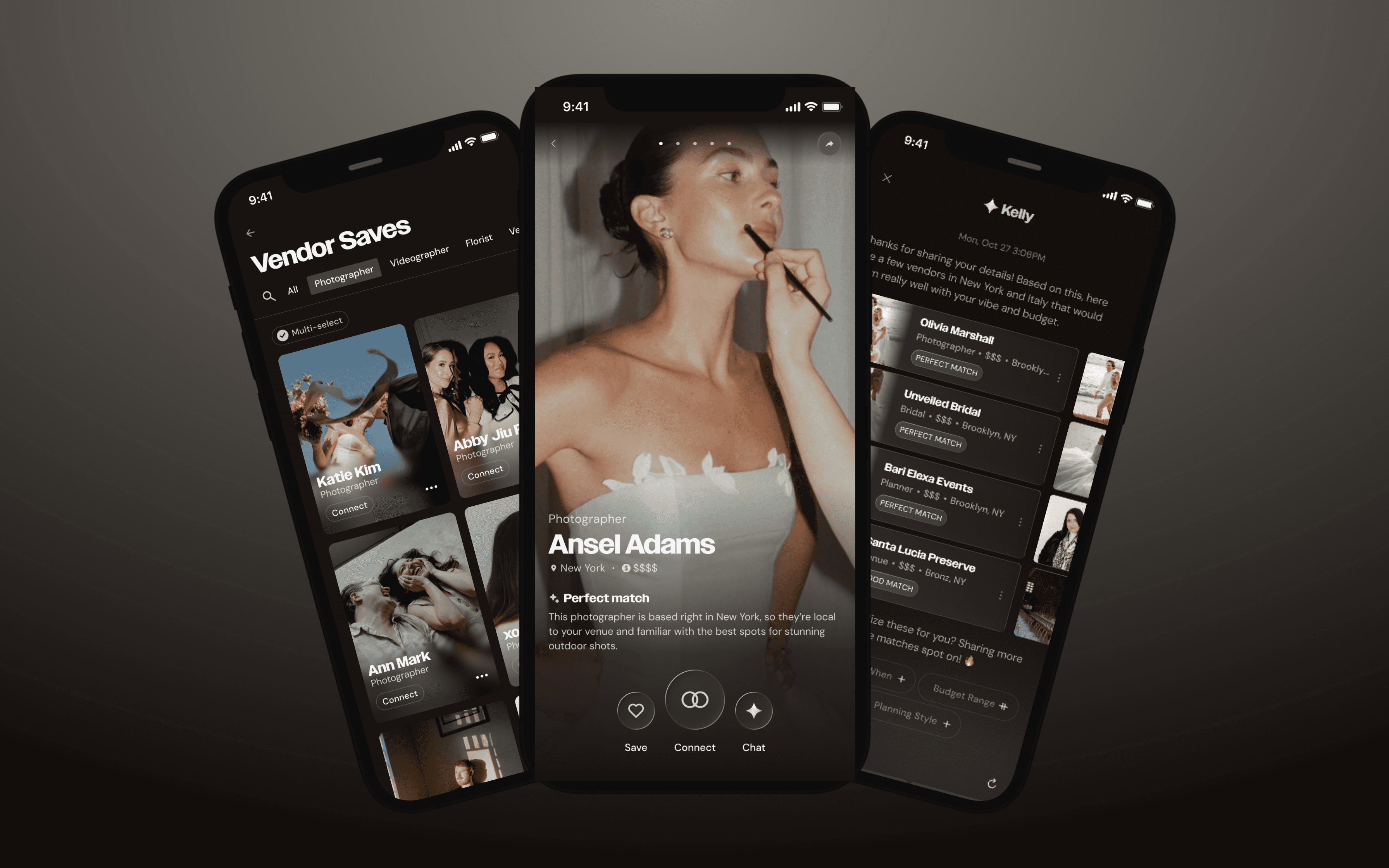
The Friend Club (TFC) is an elite wedding community transitioning from a founder-led "white-glove" service into a scalable AI-first platform. While TFC possessed a vetted network of 1,300+ top-tier vendors and a $200k ARR proof-of-concept, the manual matchmaking process created a bottleneck. I led the design of TFC 2.0, automating expert curation through "Kelly," an AI Concierge, to preserve premium intimacy while targeting a $100M revenue goal.
context
A high-touch model with a manual bottleneck.
TFC owns a vetted network of 1,300+ top-tier wedding vendors. Initially, the business relied on a manual concierge model: couples would reach TFC founders to share their vision, and the founder would act as a middleman to match couples with suitable vendors from the network.
While a basic vendor directory website existed, it was only a landing page for this human-led process. This manual bottleneck blocked TFC from scaling toward its $100M revenue goal.
The static browsing experience that ends in a manual bottleneck.
Target audience
Serving aspirational, tech-savvy couples who demand aesthetic maturity.
Our users are high-achieving Millennial and Gen Z professionals with wedding budgets typically ranging from $75k to $300k+. They possess a clear, sophisticated vision for their wedding but suffer from the "Paradox of Choice"—fragmented information and generic directories that fail to understand their specific style, personality, and budget needs.
challenge
How can we scale a boutique "white-glove" service into a scalable AI ecosystem?
To achieve our growth targets, my task was to design TFC’s first member-facing product—translating that "white-glove" concierge feeling into an automated experience while solving three core strategic problems:
Scaling "White-Glove" expertise
Automating personal expert intuition into "Kelly," an AI Concierge, without losing the premium human feel.
Capturing data without friction
Gathering 7 critical data points (Location, Budget, etc.) from users who have zero tolerance for clunky, long-form registration.
Bridging the trust gap
d
Proving that an AI-driven match can be more reliable and stylistically accurate than a couple's own manual research.
key Solution #1
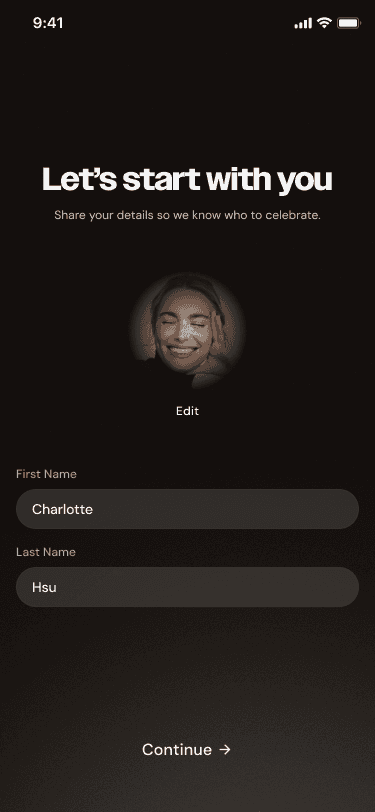
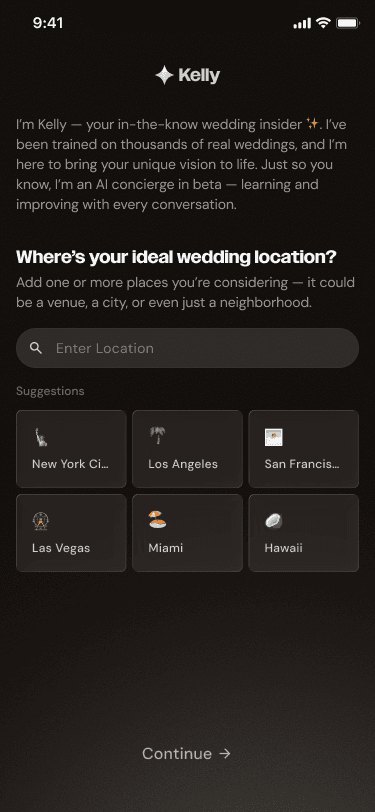
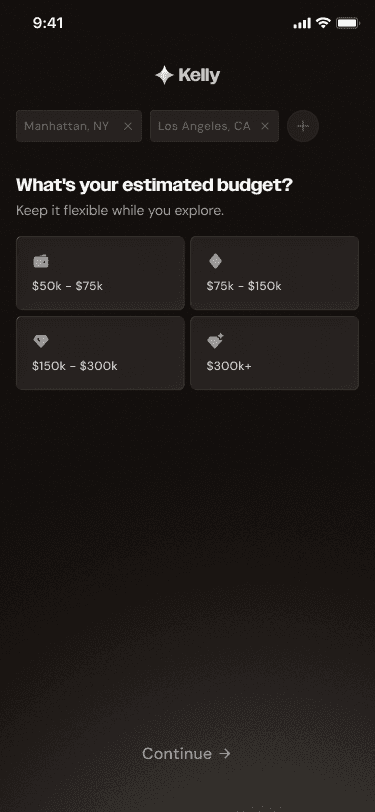
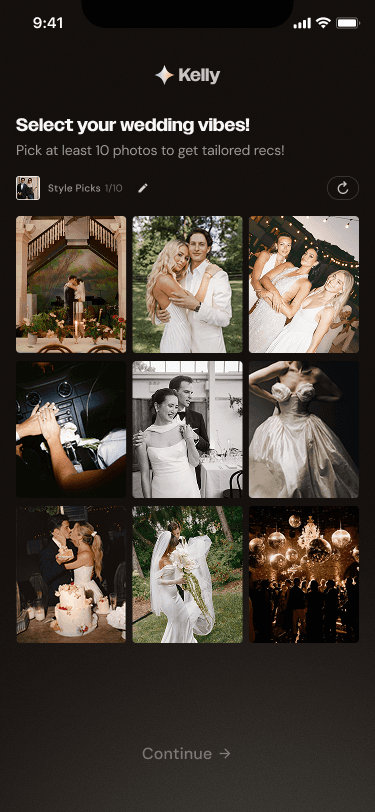
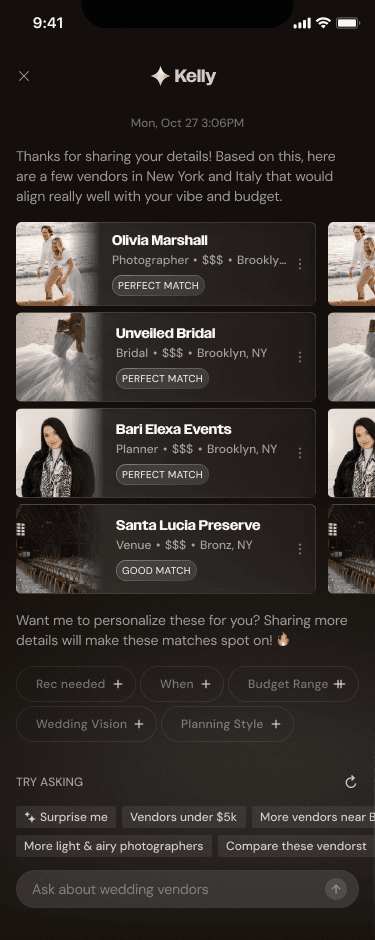
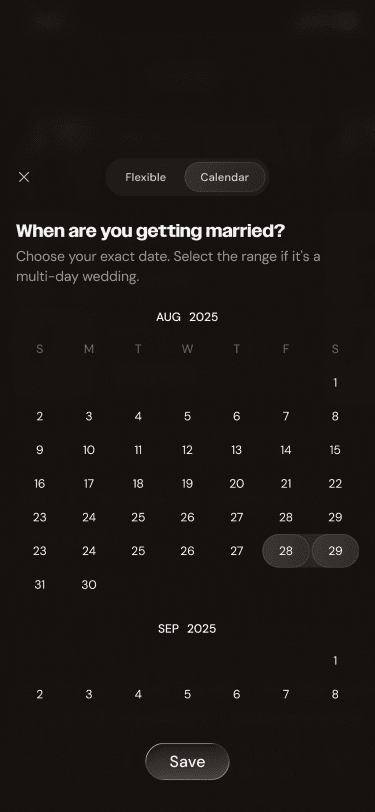
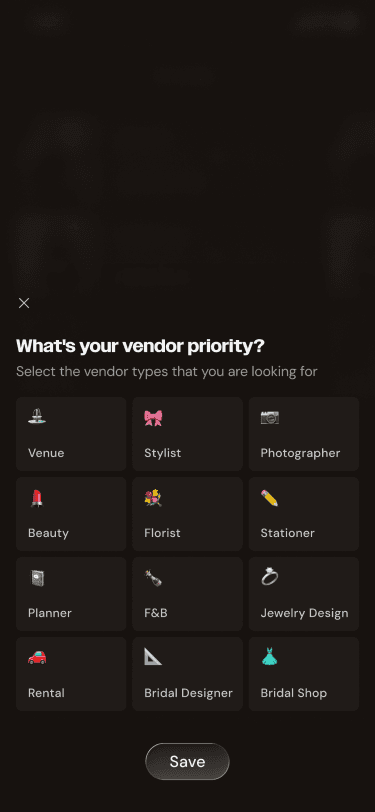
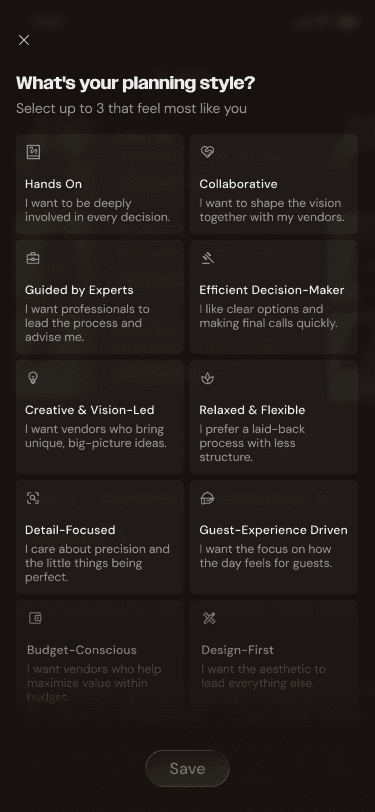
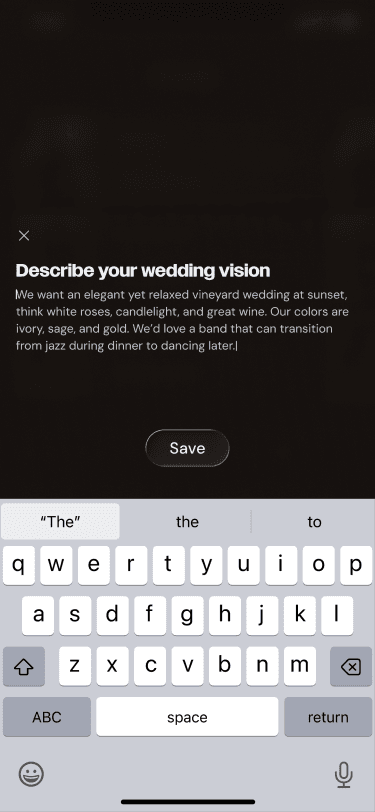
Capturing the couple's vision through a lightweight, consulting-style onboarding.
Instead of a tedious intake form, I designed a streamlined dialogue that asks for the 3 most critical data points before immediately granting access to the product. To ensure long-term matching accuracy, I implemented subtle "nudges" within the main chat interface, encouraging users to complete the remaining 4 data points as they interact with the AI.
key Solution #2
Recommending vendors through the power of collective community taste
TFC 2.0 moves beyond basic filters by tapping into "Collective Taste." The platform identifies "lookalike" couples with similar aesthetic DNA and recommends vendors with a proven history of success in that specific "vibe."
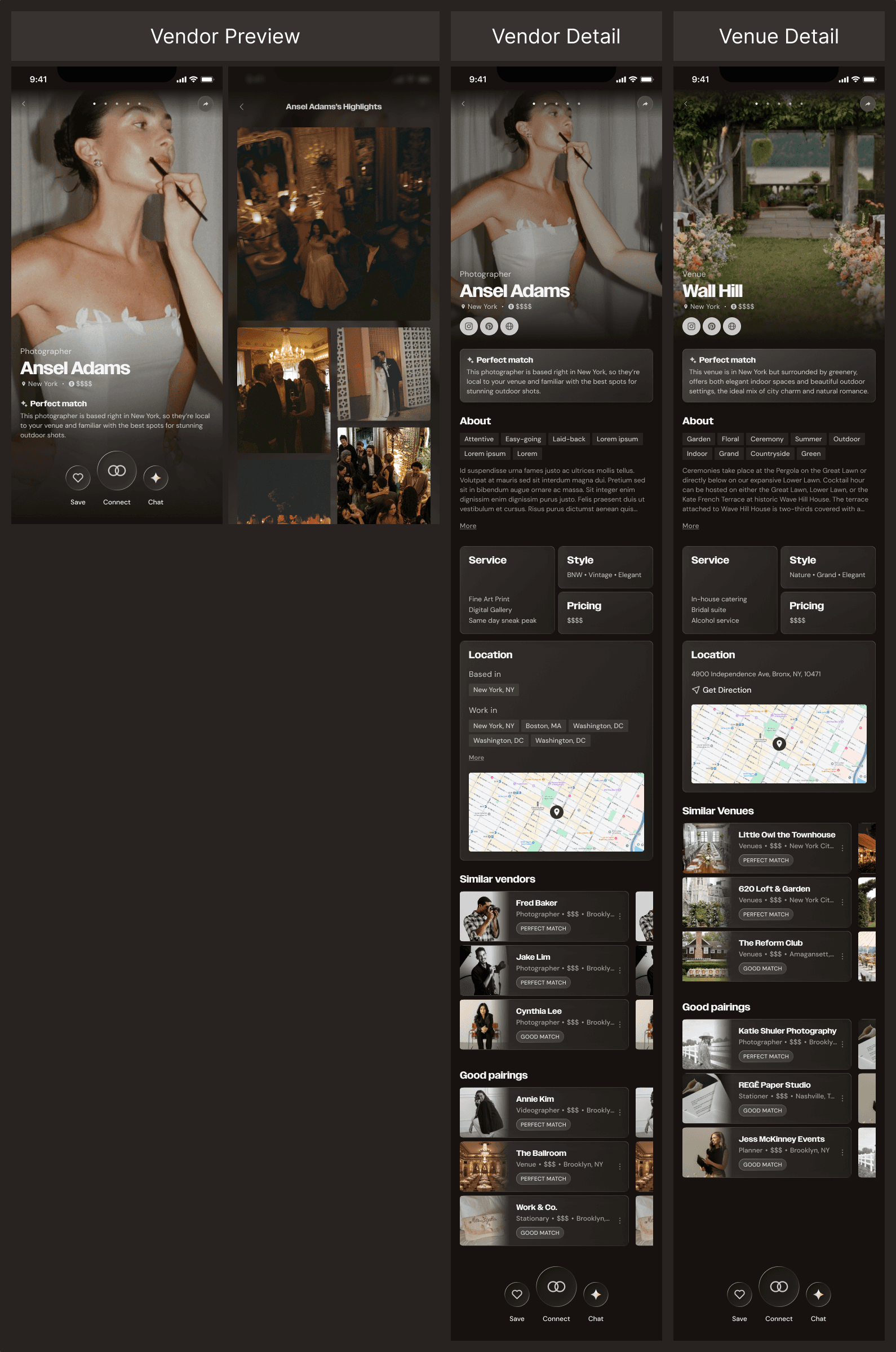
This logic is visualized through curated discovery modules: "Similar" suggestions surface vendors with a comparable aesthetic, while "Good Pairing" recommendations highlight professionals who frequently collaborate as a cohesive team, ensuring a seamless stylistic match across different vendor categories.
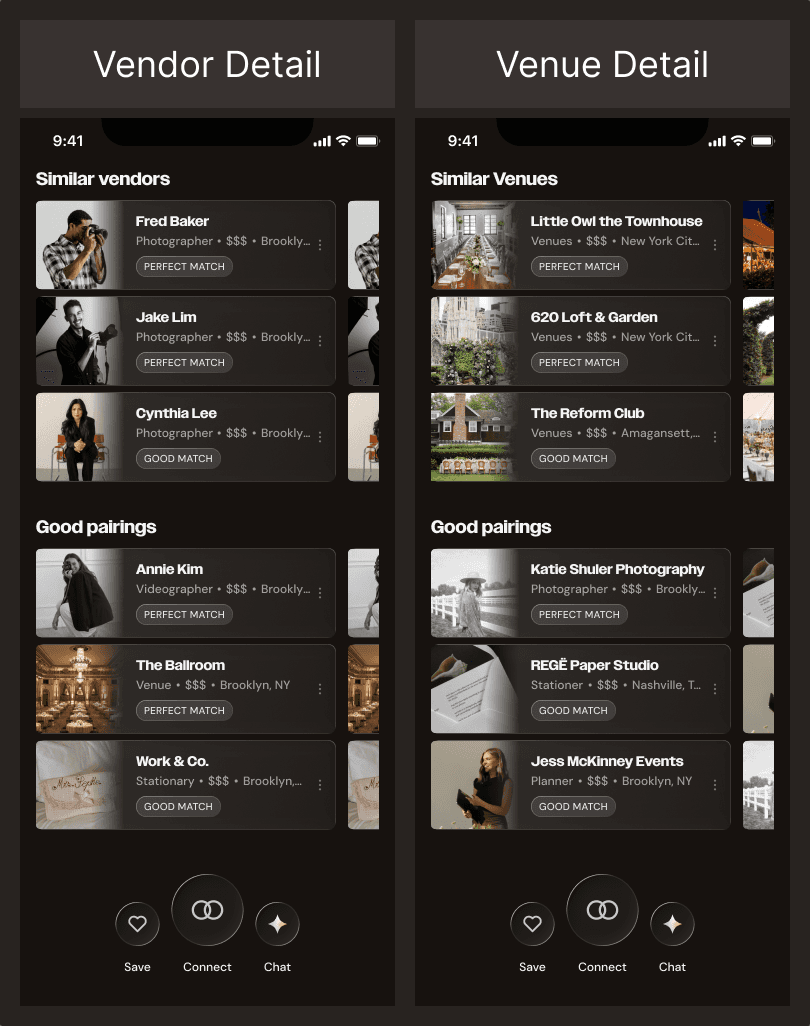
UI modules for similar styles and ideal vendor pairings.
key Solution #3
Transforming vendor discovery into a chat-driven, personalized consultation.
We replaced the traditional search bar with a Chat-Driven Discovery model. Users interact with the AI Concierge to explore options and refine preferences in real-time.
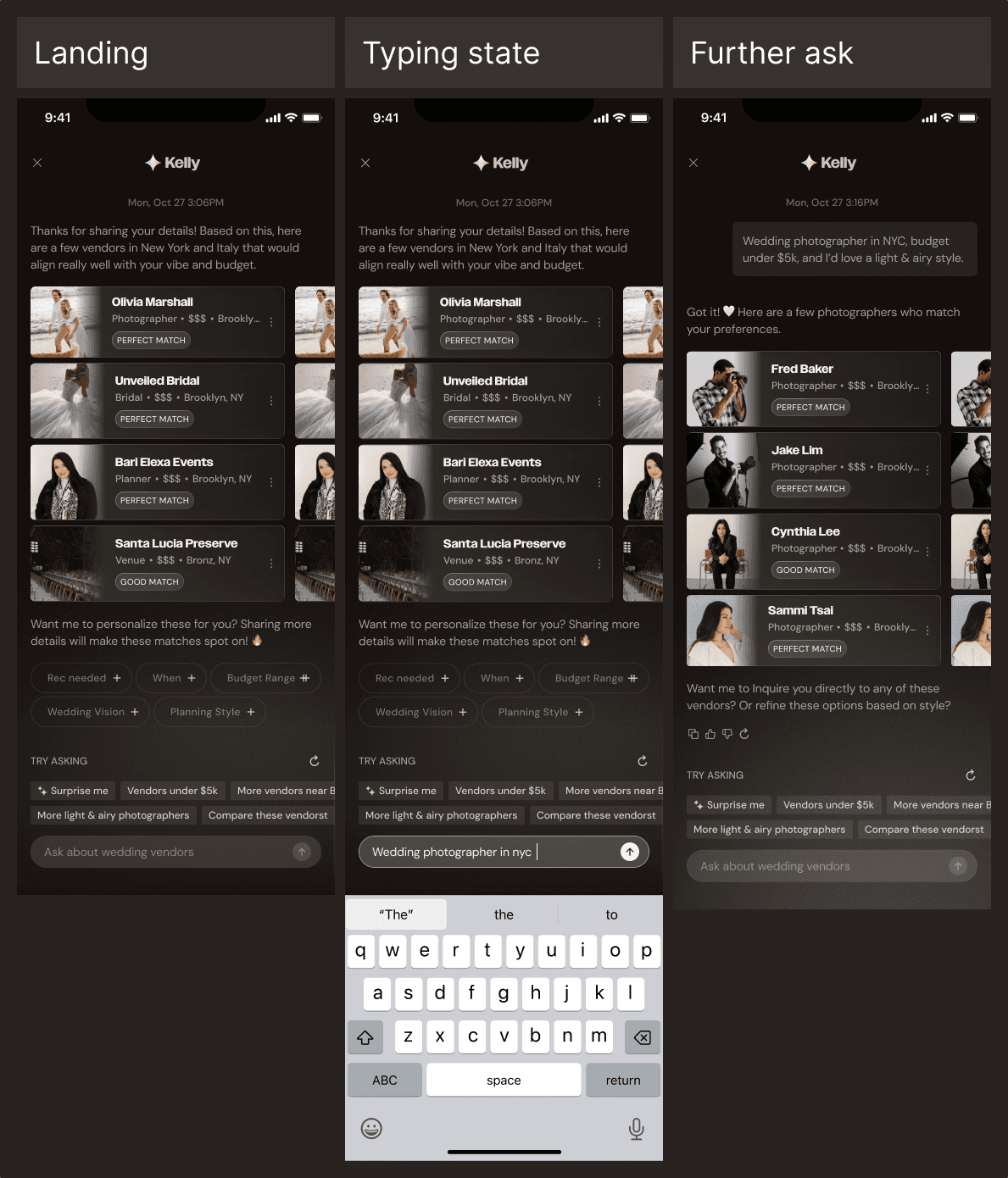
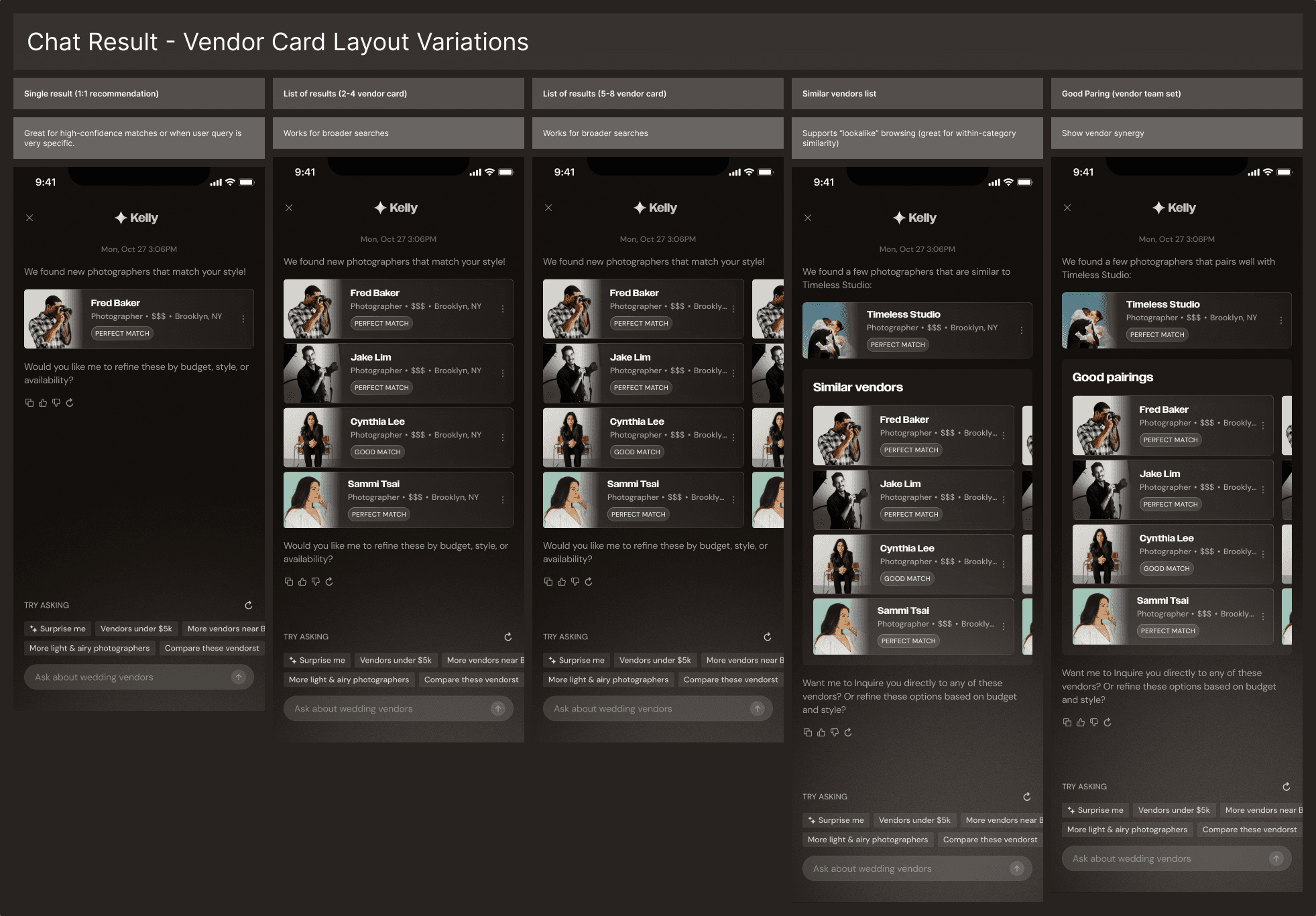
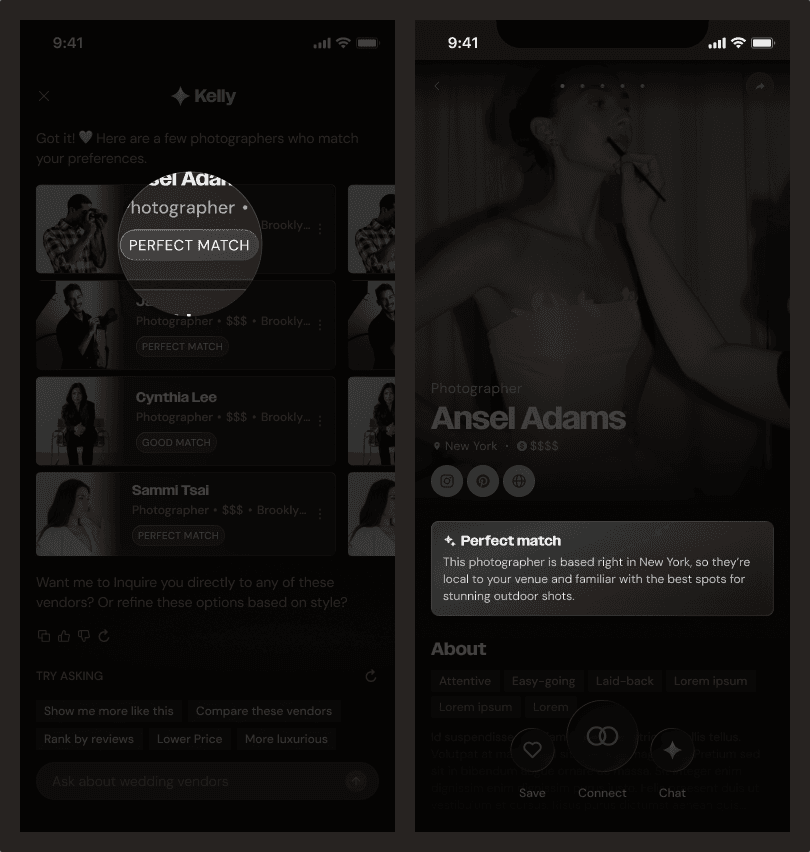
To maintain momentum, I designed a "Continuous Discovery" loop at the end of the connection flow. Once a user reaches out to a vendor, the AI proactively suggests follow-up actions—such as finding similar profiles or exploring "good pairings"—seamlessly guiding them back into the discovery chat to build out the rest of their vendor team.
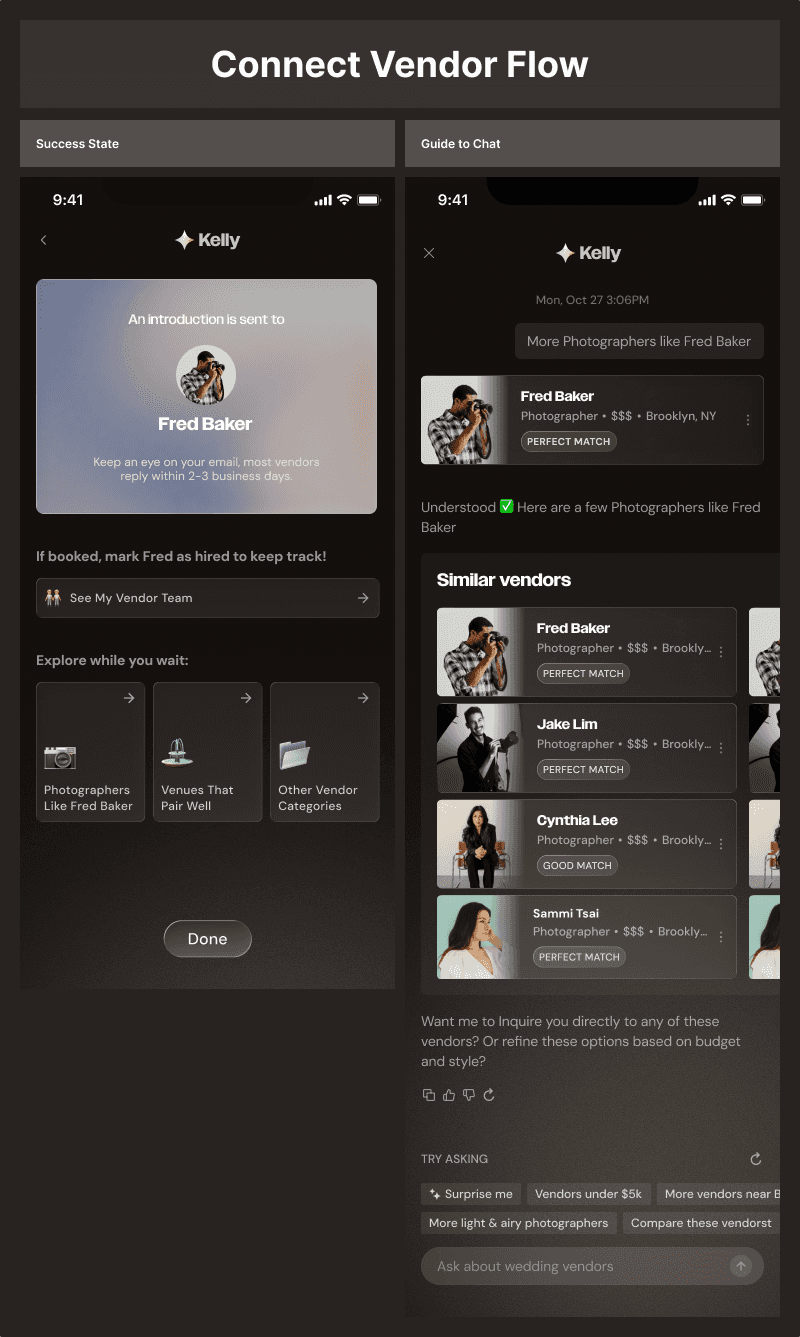
UI modules for similar styles and ideal vendor pairings.
Solution #4
Prioritizing critical evaluation signals on Vendor Profile to accelerate user decision-making.
To maximize connection probability, I designed vendor profiles to surface the most vital decision-making data, such as past work photos, location, and price range. By highlighting the Match Rationale (the specific "why" behind a match) and Team Social Graphs (proven vendor collaborations), the UI effectively bridges the trust gap, allowing couples to vet professionals at a glance.
Outcome
Delivering a complete high-fidelity ecosystem and design foundation.
The outcome of this project was an end-to-end mobile app experience and a robust design system ready for engineering implementation. This included:
High-Fidelity Product Flow
A fully interactive representation of the conversational discovery flow, used to secure final stakeholder approval and investor confidence.
Scalable Component Library
A modular system of UI elements (Match Rationale cards, Vendor Detail modules) that allows TFC to launch new vendor categories with zero design debt.
Standardized Product Logic
A defined taxonomy for vendor attributes that bridges the gap between subjective user "vibes" and back-end AI matching logic.
Impact
Breaking the manual bottleneck to enable a $100M scalable business model.
While the platform is currently moving through the development phase toward launch, its strategic impact has already transformed the business:
Scaling toward a $100M Growth Target
By replacing manual intervention with AI-driven matching, the business can now serve thousands of couples simultaneously without scaling the payroll.
Driving a Self-Reinforcing Network Effect
Implementing "Collective Taste" ensures that every new user interaction makes the platform’s recommendations smarter, creating a proprietary data moat.
Maximizing Conversion via Trust Signals
By designing "Match Rationales" and "Social Graphs," I transformed the fragmented research process into a high-confidence exploration experience, increasing connection rates between couples and vendors.
future steps
Defining success through data-informed iterations
As TFC 2.0 moves toward its full launch, I have identified key performance indicators (KPIs) to monitor. These metrics will validate our "Taste-Driven" hypothesis and guide the next phase of product optimization.
Onboarding Completion Rate: To verify if the "Momentum-Driven" onboarding effectively reduces drop-offs while successfully capturing the 9 critical data points.
Match-to-Connection Conversion: To measure the effectiveness of the "Match Rationale" and "Collective Taste" engine—specifically, how often a recommended vendor leads to a user inquiry.
AI Engagement Depth: Monitoring the frequency and quality of interactions with "Kelly" to identify where the conversational flow can be further refined to feel more human and less robotic.
Vendor Response Latency: Tracking how quickly vendors engage with AI-matched leads to ensure the ecosystem maintains its "white-glove" service standard as user volume scales.